
This post may contain affiliate links, meaning if you buy or book through one of these links, I may earn a small commission .
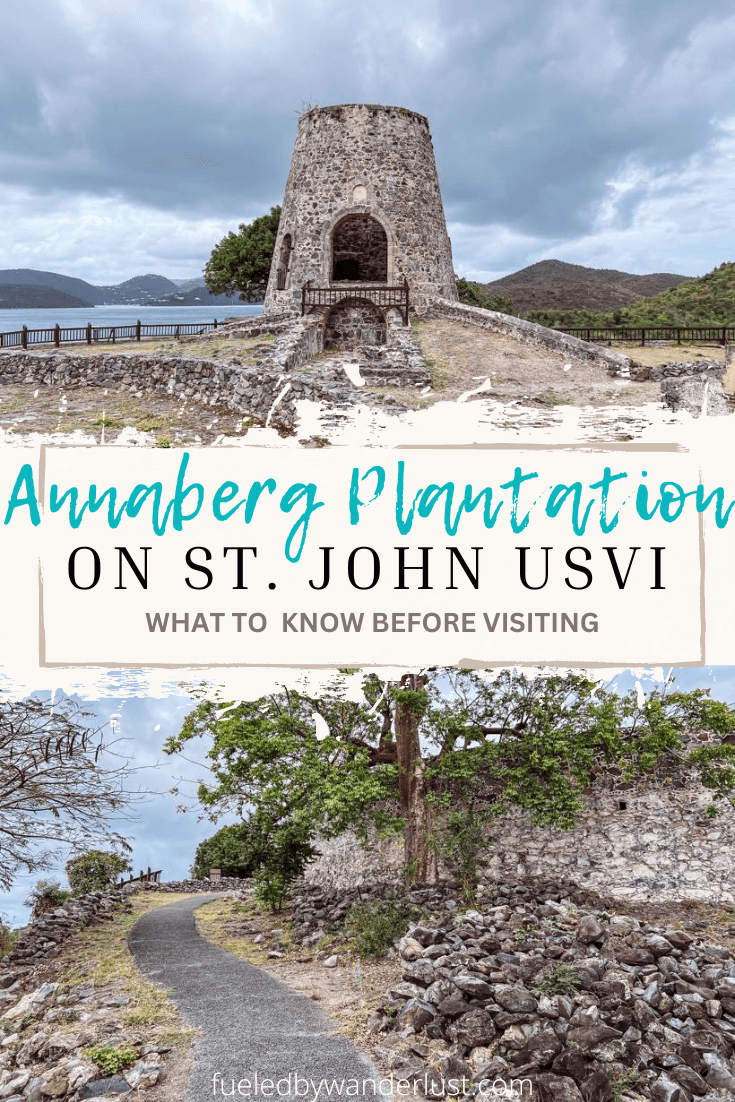
Headed to St. John in the US Virgin Islands soon and wondering what this island has to offer besides white sands and turquoise water? Hidden inside the lush vegetation of Virgin Islands National Park are scattered stone ruins that date back to the period of Danish colonization. While many of these sites require a hike to access, the extensive remains of Annaberg Plantation are reachable within minutes from the popular beaches along North Shore Road.
Annaberg Plantation started operations during the 18th century and eventually became the largest sugar producing estate on St. John. Although the island’s sugar mills stopped operating long ago, today it is still possible to explore some of the old factories. Lonely as they are now, these sites were once bustling with activity and the lush hills behind them were covered in rows of sugarcane stalks.
A stroll through Annaberg takes sixty minutes tops and is easy to squeeze in between the beach and lunch. It took me far to long to properly visit this sight, but trust me when I say it’s completely worth the trip. To help you make the most of your time at Annaberg Plantation, below I am sharing how to get there, what to see, and the history of this fascinating site.
A Walk Through Annaberg Plantation on St. John
Quick Facts
- Trail Length: .25 miles
- Total Time: Thirty minutes to one hour
- Cost: $0 (or donation)
- What to Bring: sunscreen, bug spray, hat, sunglasses, camera, cell phone, and water bottle
Why Visit Annaberg

St. John has dreamy beaches, but there is so much more to this island than meets the eye. After all, there is a reason why 60% of the territory lies within Virgin Islands National Park. You may be reluctant to trade relaxation for a hike or a history lesson, but with Annaberg you don’t have to.
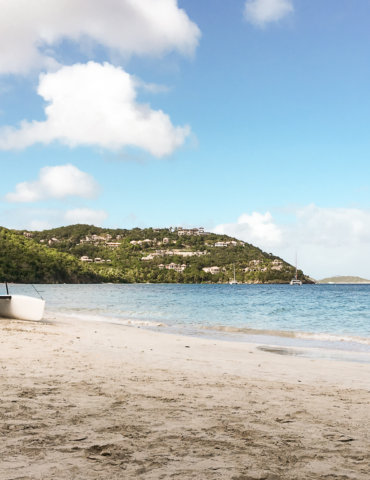
Only being a six-minute drive from Maho Bay on North Shore Road, it’s convenient to visit Annaberg after the beach. Unlike the three-mile trek to the ruins along the Reef Bay Trail, for Annaberg you can park your car in a lot a short distance from the old sugar mill.
The loop around the ruins is only a quarter-mile long, and won’t take more than an hour to explore. Making this stop ensures you have a well-rounded trip to St. John, helping you envision a time when tourism was not the island’s primary industry. Plus, Annaberg is only about ten minutes from Coral Bay, where you can find great restaurants for lunch afterwards.
How to Get to the Annaberg Plantation Ruins

Annaberg is located on the northeast side of St. John. The easiest way to reach the ruins from Cruz Bay is by driving twenty-four minutes along North Shore Road past all the beaches.
Taxis will come here from Cruz Bay or beaches like Trunk Bay and Cinnamon Bay as well, but it might be a good idea to arrange transport back so you aren’t waiting around. Taxis are parked at the beaches all day, but don’t typically pass by Annaberg unless they are dropping someone off.
Drive all the way past Maho Bay and follow the road as it curves right and then left; you will need to keep left at the next junction towards Annaberg. Turn right when you reach the water, then drive a short distance to reach the parking lot on your right.
You can also reach Annaberg by heading east on Centerline Road and turning left onto North Shore Road at the smoothie stand. Be sure to follow signs for Annaberg by turning right at the first junction, or you will end up heading west towards the beaches. There are worse places to end up, I suppose.
Upon arrival, take the wooden staircase in the corner of the lot up to the beginning of the Annaberg Loop Trail.
A Quick History of Annaberg
Columbus’s initial voyage in 1492 set off two centuries of Europeans flocking to the Caribbean islands and parts of South America to snatch up lands for growing sugarcane. Motivation was high to meet the growing demand for sugar in Europe.
Denmark ultimately gained control over St. John in 1718. However, growing and processing sugarcane was excruciatingly hard work, which the settlers were unwilling to do. Like other Caribbean islands under European control at that time, the Danish turned to kidnapping and enslaving Africans as a more profitable way to meet their labor demands.
The plantation owners subsequently forced the enslaved workers to clear St. John’s hillsides, thereby destroying much of the natural vegetation. The slaves then planted the sugarcane in even rows, which grew to around six feet high.
Annaberg is only one example of a sugar mill plantation that existed on colonial St. John, but it is one of the best surviving and once had the largest production on the island. Over 600 enslaved people were living and working on the property at its peak. These workers would harvest 1,300 acres of sugarcane and produce 100,000 tons of sugar a year.
In 1848, Denmark abolished slavery in all of its territories. Finally, in 1867 a destructive hurricane ended sugar production at Annaberg for good.
What to See at Annaberg Plantation

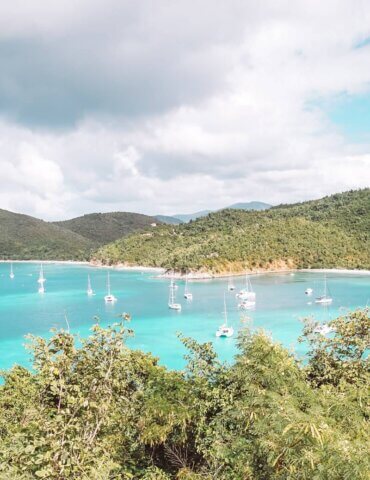
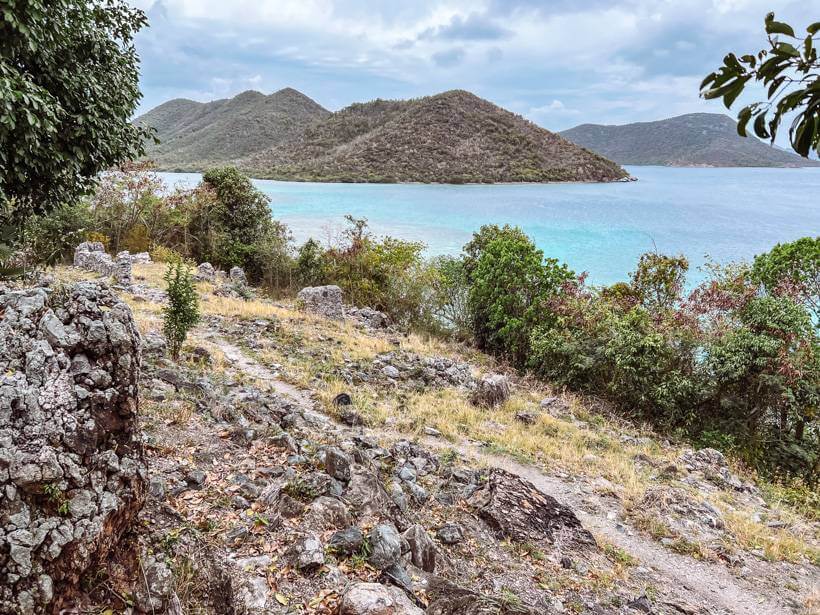
Welcome to the quiet northeast side of St. John where the Annaberg plantation sits lonely on a hill. The structural remains at Annaberg were built between 1797 and 1805. While wandering among the crumbled walls and foundations, you can appreciate views over Leinster Bay, whose waters reflect cobalt blue with swirls of bright aqua.
The area doesn’t have much shade, so wear a hat, sunscreen, and maybe even sunglasses. You’ll pass a small unmanned booth with a voluntary donation box as you enter.
Fun Fact
The Leinster Bay waterfront is part of the National Underground Railroad Network to Freedom. From these shores, enslaved persons living on St. John would escape to nearby Tortola of the British Virgin Islands. Britain had abolished slavery within its territories in 1833, so the promise of freedom was just a short, albeit dicey swim or boat ride away.
Slave Quarters
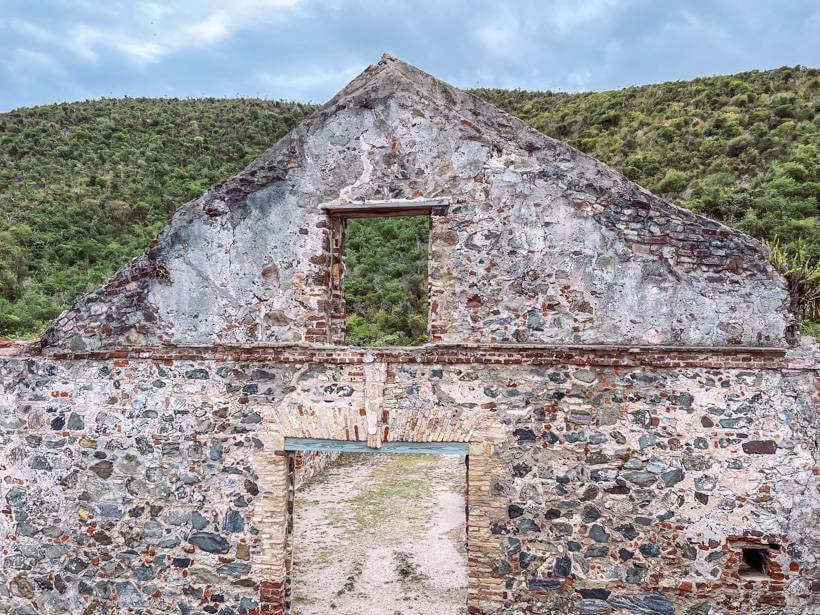
The first structures you’ll meet upon entering the property is the hillside stone rubble of the former slave cabins. The slaves mostly used these rough dwellings for sleeping and storage.
Slaves had to build their own “wattle and daub” huts, which consisted of woven stick walls (wattle), earthen floors, and tyre palm roofs. They would construct the exteriors with “daub”, a sort of plaster made from organic materials like clay and even cow manure. Plantation owners may have eventually exhibited preferencial treatment to highly skilled slave laborers, allowing them to build cabins out of stone.
The enslaved people would do everyday chores and cooking in the yard outside. They had no choice but to grow their own food on unused land, which was usually not ideal soil for growing. Records indicate that many slaves would die of starvation during a drought.
Finding time to cook and do housework must have been difficult for the enslaved workers at Annaberg, especially during the sugarcane harvest. During those times, slaves would work eighteen-to-twenty-hour days with the harsh Caribbean sun beating down their necks.
Horse Mill

Before there were windmills, enslaved people used horses, mules, and oxen to power the machinery that crushed the sugarcane. The livestock would walk in a continuous circle under the hot sun. Meanwhile, slaves would feed raw sugarcane stocks into rollers that squeezed out the juice, which flowed down to the boiling room.
The slaves would eventually build a windmill to replace this livestock-powered method. However, on a slow wind day, the horse mill would see usage once again.
Today, a cookhouse built in the early 1900’s still stands in the far left corner of the old horse mill. On Monday through Wednesday between November and June, you can often attend a bread making demonstration here.
Windmill

Crushing the sugarcane with the horse mill was a slow process, so a stone windmill was eventually built. This process improvement produced more juice, while being less manual and requiring fewer resources.
The windmill still stands today, although it is missing its turret (the revolving portion with the axle and sails). The turret was what once rotated the central shaft as it turned in the wind, the shaft then rotating the rollers that crushed the raw sugarcane stalks. Juices released from the stalks ran down the rollers into a gutter that flowed downhill to the boiling room, which was the sugar processing factory.
Boiling Room

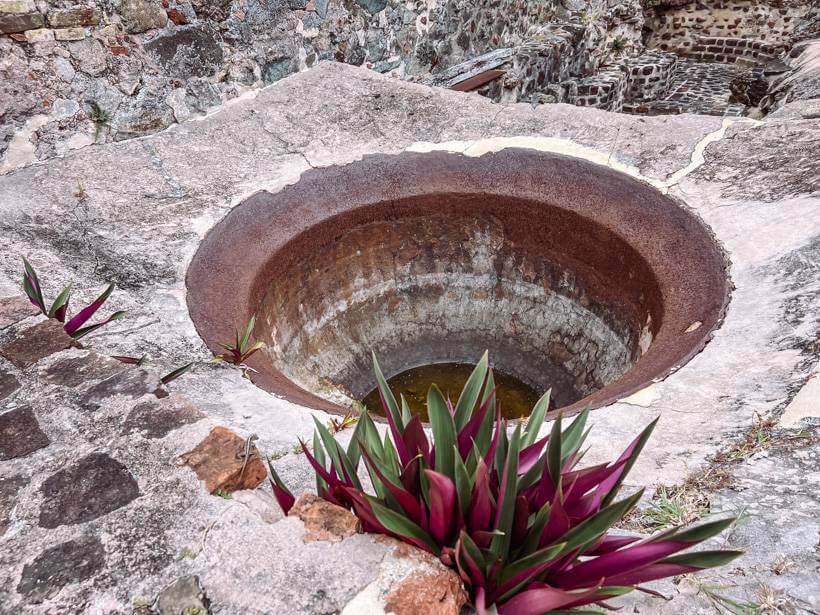
In the sweaty boiling room, enslaved workers would refine the raw sugarcane juices into their final products: sugar and molasses. This very important space would be buzzing with activity and was also a very hot workspace.
First, the juices that flowed from the windmill and horse mill in wooden troughs would be transferred to boiling kettles. As the sugar boiled, it would be ladled to copper kettles of diminishing sizes to further purify the product. This was risky work – a single scalding splash of the juice could badly burn the person handling it.
Afterwards, the resulting syrup was poured into flat wooden pans to cool and crystallize into sugar. A skilled “sugar cooker” would make the call on when this precarious cooling process could start. Syrup would become molasses if removed too soon, but would burn if left too long.
Rum Still
Rum was a by-product of waste produced during the sugar-making process. Although only the platform still exists today, at one time a copper rum still sat on top of it. Workers poured a fermented mixture of water, molasses, and sugar-rich waste products called mash (or maubee in local Creole) into the still.
As the mash was warmed over a small fire, alcohol vapers traveled in copper tubing to a cistern. In the cistern, coils that were immersed in cool water converted the vapors into rum.
You have now completed your tour of Annaberg! Exit through the wooden gate and make your way back down the steps to the parking area.
Want to Learn More About Annaberg Plantation?

Every Monday through Wednesday from 10am to 2pm, Friends of Virgin Islands National Park hosts a cultural program at Annaberg. First, you can learn about breadmaking traditions at the bake house from Ms. Olivia. You’ll often find her preparing coconut bread, plain dumb bread, or johnny cakes.
Next, visit Mr. Charles Jackson, who has worked at Annaberg for 15 years, in the garden. A landscaper and gardener from birth, he will teach you about sugarcane, bush tea, and medicinal plants on the island.
• • •
Now you are fully prepared to visit Annaberg Plantation on the island of St. John USVI. Viewing these ruins allows you to explore beyond this island’s gorgeous beaches to more deeply experience its history and culture. I learn more about St. John with every visit, which in turn makes my connection to this island grow stronger and stronger.