
This post may contain affiliate links, meaning if you buy or book through one of these links, I may earn a small commission .
In 2019 we have our biggest trip planned to date. We are travelling to Italy and France, which was prompted by my former French exchange student inviting me to her wedding. I haven’t studied a foreign language in a long time, let along two languages at a time. However, this was a welcome excuse to start again. So yes, here I am, trying to learn both Italian and French in the same year.
Why I’m Not Crazy For Trying This
Now, it’s not completely from square one, as I took 4 years of Spanish and 2 years of French in high school. I had also taken a couple semesters of Spanish in college just for fun. So I do have a small foundation in learning a foreign language . I’ve actually found from the little bit of studying I’ve done so far that I remember more French than I thought I did.
That being said, I did start off knowing zero Italian, other than words like pasta and spaghetti. The important stuff, you know? I’ve been going at it for a few weeks now, though, and I think I’m finally starting to catch on a little bit. I’m really loving the Italian language so far, and I find myself turning into a major foreign language nerd again. I look forward to every new lesson, and even peak ahead to see what’s coming.
My Current Foreign Language Learning Strategy
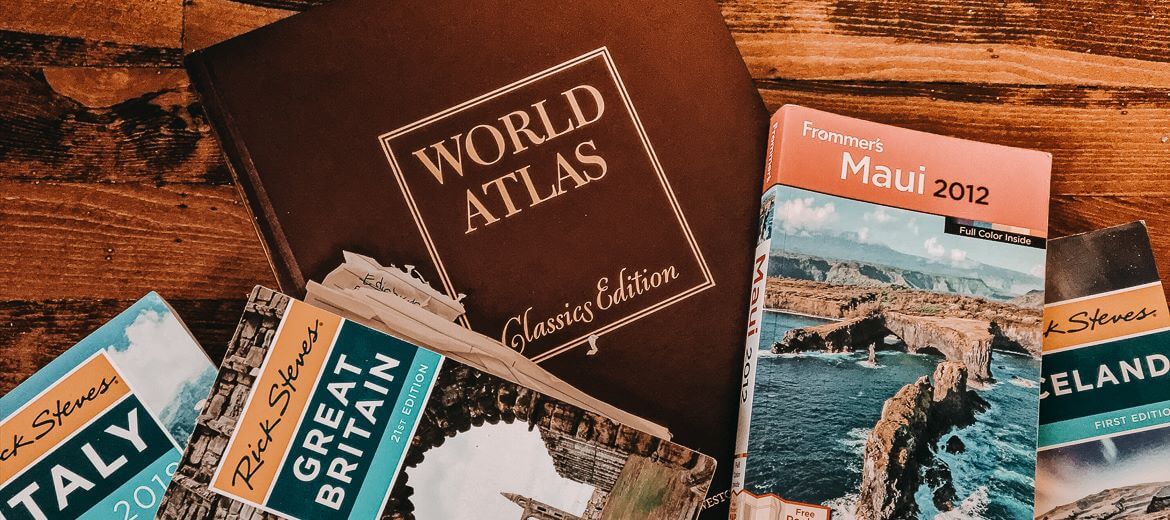
So far, the bulk of this learning for both languages is being done on the Duolingo app, as well as the Coffee Break French and Coffee Break Italian podcasts. I’m trying to learn as much as I possibly can for free. However, I did invest in an Italian paperback textbook for about $10 on Amazon to help supplement my learning since I’m starting from scratch. I happened to have a French book about verbs from my language nerd days in high school, so I’ve cracked that book open again recently after years of collecting dust. I honestly can’t believe I even found it, it’s been so long.
Learning a Foreign Language is Not All or Nothing
So, what do you think? Am I nuts for trying to do this? I am not sure how much one can reasonably expect to learn after 8 months of self-study, but I guess we will find out. Sometimes I admittedly do start to feel overwhelmed and doubtful about it all, but then I just tell myself to keep going. Every little bit I learn will have me knowing more in the end than I do now. I find myself constantly falling into that perfectionist mindset, before I finally talk some sense into myself.
It does not need to be all or nothing. It’s better to know a lot, or even a little of French and Italian than none at all. The goal does not need to be fluency, but instead progress. So I will continue to immerse myself in these languages over the next 8 months. French 3 days a week and Italian 4 days a week has been the schedule so far. I will continue to aim for progress>fluency.
Have you ever attempted to learn multiple languages over a period of months? I’d love to hear how that went for you, and what your strategy was!
I stumbled over your blog searching for info about Chianti, then ended up reading some of your posts. This one struck a chord since in the past I’ve tried to learn some French and Italian before travelling, although I don’t have the same background you did in HS. I don’t know if you’ll see this reply since the post is 2 years old, but in case you get notified of new replies I thought I’d post.
To start, let me give you a link to a forum for people learning language on their own: https://forum.language-learners.org/ A lot of the discussion is repetitive, but browsing posts may give you some ideas
Since I started from a lower base I never got that far (as in able to hold a real conversation) but I’ve learned enough to travel on my own in Italy and France. Context goes a long way; in a store I’m likely trying to buy something and not asking about the soccer game. So I assume what they are saying is related to the purchase.
As for my learning, I started with Pimsleur. Very expensive to buy, but many libraries have the program for more popular languages. I found I needed to do each lesson twice. Pimsleur is founded on real psychological research, that of the forgetting curve and spaced repetition. This is the key to learning anything new. I also used the audio courses by Michel Thomas and Paul Noble (pretty much the same thing). These get you a lot farther than you’d think in a few hours. By using these programs I had at least survival-level skills for travel.
For real learning I’d suggest a few resources. One is the Assimil program. It is an old approach and you can buy older versions of the program (book & CD) that aren’t too expensive. Here is one review: https://www.npr.org/templates/story/story.php?storyId=5021582 I started on the French one a few years ago but didn’t get too far; when I retire in a few years it is my plan to spend time with it. Another resource are older FSI programs. These were used to train diplomats. Older versions of the program are in the public domain so you can download the audio and course material. It isn’t the same I suppose without an instructor but people have written favorable reviews. The third resource, once you get to a level where you can hold conversations, is italki or similar. The internet has really flattened the world, and italki enables anyone to work as a teacher. For relatively little money you can hire a French or Italian student or someone else that wants to earn some spare money having conversations online. Of course skills and compatibility vary, but really using the language a few hours a week seems like a way to maintain & improve! I plan on using this in the future