
This post may contain affiliate links, meaning if you buy or book through one of these links, I may earn a small commission .
January might seem like an unconventional time to visit Iceland. I mean, in winter aren’t most people trying to head south to warmth rather than north to more cold? Perhaps the northern lights are calling your name, and you’re wondering if a trip to Iceland in January is worth it.
There are so many great reasons to visit Iceland in January. In fact, it’s often an overlooked month to visit this Nordic wonderland, due to darkness, cold temps, and high precipitation. January may fall during Iceland’s low season, but this actually brings some great perks.
For one, hotel and flight prices are lower than other times of the year. Second, you won’t be competing with large crowds at popular sights. And this is just the tip of the iceberg!
I’m so glad my husband and I followed our urge to head north instead of south this past January. As we learned, exploring Iceland in January does bring unique adventures and challenges, but it doesn’t have to be intimidating. I’ve compiled the below list of seven essential things to know when planning a trip to Iceland in January, so you too can have an out-of-this-world experience.
What to Know When Visiting Iceland in January
Here is everything you need to know, from practical tips to unique seasonal things to do.
1. January Weather in Iceland

January brings Iceland’s coldest temperatures of the year, with average highs of 35.4 degrees Fahrenheit in Reykjavik. However, this above-freezing average may surprise you, with Iceland sitting just below the Arctic Circle.
Iceland’s milder winter temperatures are thanks to the warming effects of the Gulf Stream ocean current. The Gulf Stream transports warm Caribbean water all the way to western Europe, which keeps countries like Iceland warmer than you’d expect at higher latitudes.
January is also a rather wet month in Iceland, when you will see anything from rain to snow to sleet. Maybe even all three in one day! It’s crucial to bring weather resistant clothing that will keep you warm and dry.
I recommend reviewing this packing list I made for a prior October trip to Iceland. October temperatures are only slightly warmer and conditions are just as rainy, so it’s still perfectly relevant for a January trip.
Travel Savvy Tip
Driving in Iceland can be tricky during winter months like January. With plenty of rain and snow in cold temperatures, roads can covered in snow and ice. If you are not used to driving in winter conditions, a trip to Iceland is not a good time to start.
Experienced and confident winter drivers should book a vehicle with four wheel drive and snow tires. However, less experienced drivers should consider booking tours to let a local handle any difficult road conditions. Regardless of experience, all drivers should always check Iceland road conditions on this website before heading out.
Although road tripping around the entirety of Iceland is quite popular in summer, it’s less so in winter. Weather can make some roads dangerous or impassable. Therefore, for a winter trip, it’s best to choose a home base and do day trips as weather permits.
2. You Might See the Northern Lights
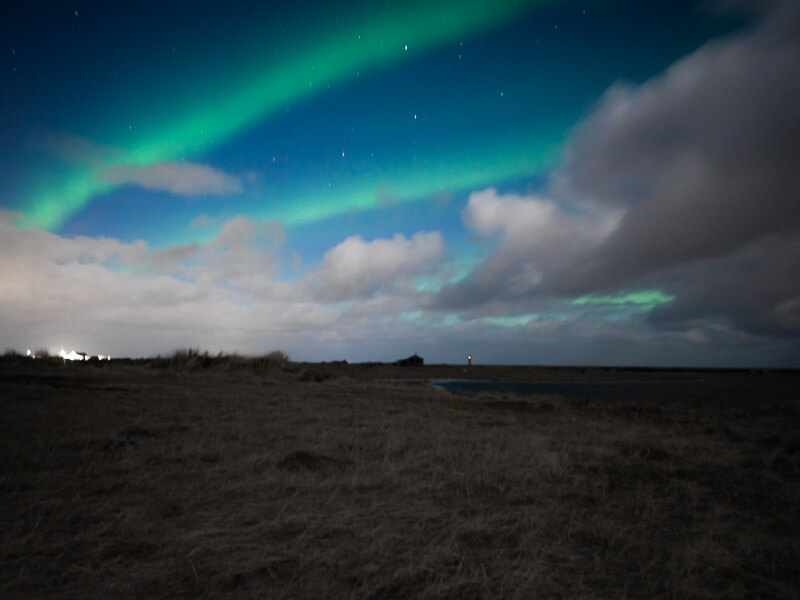
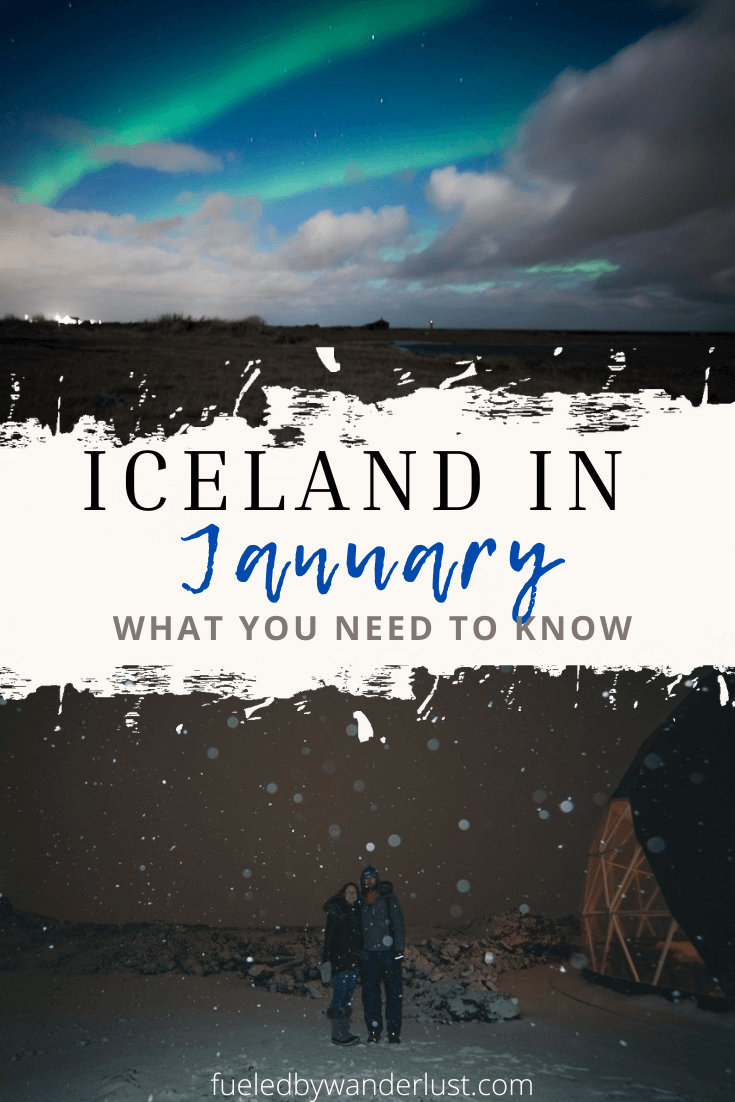
During January in Iceland, northern lights hunting season is in full swing. January is one of Iceland’s darkest months of the year, with only about 4-5 hours of daylight. As darkness is needed to see an aurora, these conditions increase the likelihood of a sighting.
While it’s possible to see the northern lights from Reykjavik, it’s best to go aurora hunting outside the city. To the untrained eye, the lights could be mistaken for a cloud if there is too much light. With more darkness, auroras are much easier to spot.
To make sure you don’t accidentally miss the northern lights, it’s best to join a tour. The guides are experts who will know exactly where to go based on projected cloud cover. They will also teach you how to hunt the lights on your own and give you a better understanding of the night sky.
3. Golden Hour Lasts All Day
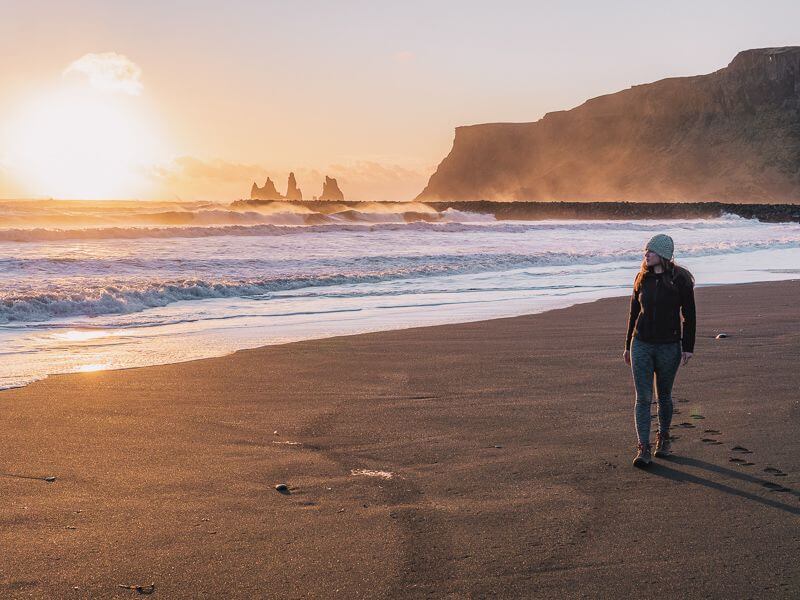
The sun doesn’t come out often in Iceland, so its appearance is always a treat. This is especially true in January, when the sun never fully rises. Translation: a sunny day in January means five hours of sunset lighting.
That means all your daytime activities will be done during the backdrop of golden hour. This makes for beautiful photos and adds extra magic to the gorgeous landscapes all around you.
The one drawback to this beauty is that constant golden hour can be a pain for driving. When you are facing towards the sun, its low position on the horizon can be blinding. So bring sunglasses!
4. January in Iceland is Ice Caving Season
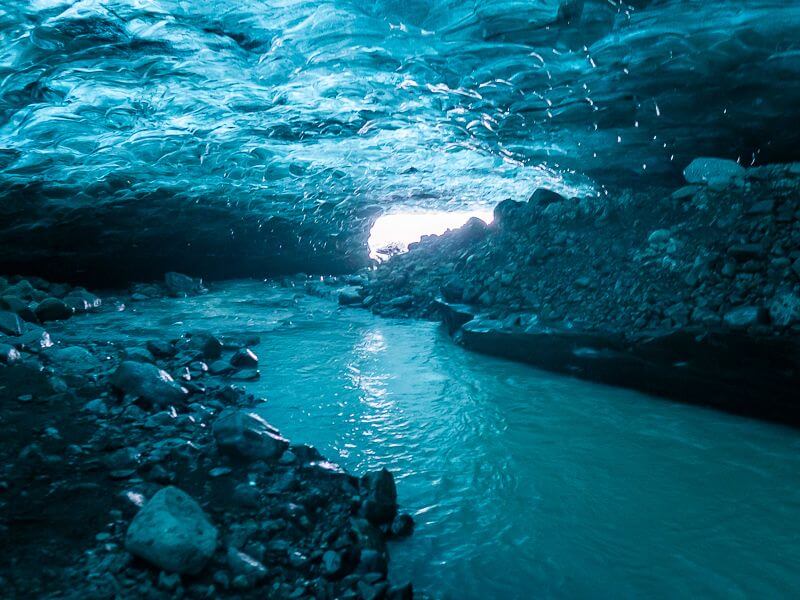
In Iceland, ice caving can only be done between November and March, so don’t miss out! Carved out of glaciers, the ice caves range in color and are only accessible when temperatures drop. Therefore, it’s a no-brainer to book a tour during a January trip to experience one of these beauties for yourself.
The most enchanting option is this amazing natural blue ice cave near the Jökulsárlón Glacier Lagoon. To reach it, you must first road trip down Iceland’s scenic South Coast, which is an exciting day trip in itself. The drive takes around five hours, and is a good opportunity to stop and see the famous waterfalls and black sand beaches along the way.
If you are iffy about doing the drive on your own, you can book a bus tour to transport you to the glacier lagoon, while making stops along the South Coast. Even if you self-drive, you will need to book a tour to visit the ice cave. While stunning, ice caves can be dangerous without the instruction of a trained guide.
5. Warm Up from the Cold in a Hot Spring

There is nothing cooler than cozying up in Iceland’s steamy hot springs as you sip bubbly during a gentle snowfall. Iceland has so many fabulous hot springs to choose from, whether rustic or chic, and you don’t even have to go far from Reykjavik.
The two most famous hot springs are the Blue Lagoon and Sky Lagoon. The Blue Lagoon is hard to resist, with its otherworldly milky blue waters and close proximity to Keflavik Airport. Its moonscape is what originally lured me to Iceland in the first place.
On the other hand, the newer Sky Lagoon offers a magical experience of its own. This hot spring is only thirteen minutes from Reykjavik by car and is situated right on the ocean. On a clear day, you can watch the sunset while indulging in “The Ritual” – the Sky Lagoon’s seven-step spa experience.
No matter which hot spring you choose, you have to add at least one to your Iceland itinerary!
6. Keep Your Plans Flexible

There’s no getting around the fact that weather in Iceland is volatile and hard to predict. If the forecast calls for rain, you might get sun and vice versa. It’s hard to rely on any prediction too closely, as conditions can change suddenly.
Obviously, this makes planning a January trip to Iceland quite tricky. How will you know if you can do that day trip or not without an accurate weather prediction?
While I’m typically the type of person who likes to plan ahead, when traveling to Iceland this will only cause undue stress. That’s why on our recent January trip, my husband and I didn’t finalize anything until the day before, or even the morning of, our planned excursions.
The one thing we did book ahead was our Northern Lights Super Jeep tour. This is because we could reschedule or get our money back if the weather precluded the tour from going out.
If you do book a tour in advance, make sure it has a good cancellation policy. For a northern lights tour in particular, it’s good to book a tour operator that won’t go out if weather conditions are not ideal. That way you won’t waste your time and money freezing in the cold for nothing.
7. Consider Bus or Super Jeep Tours
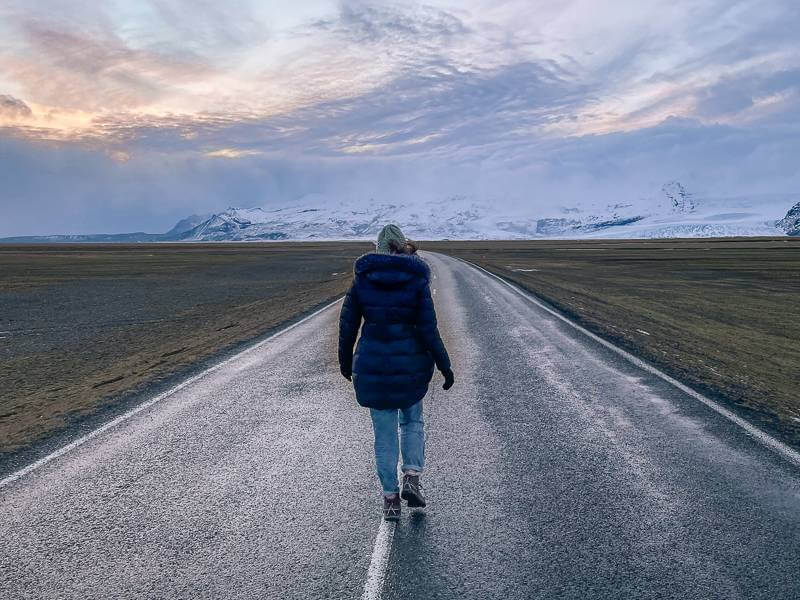
One way to add some certainty into your itinerary is by booking bus or Super Jeep tours for popular day trips, like the Golden Circle or South Coast. That way, if the roads are slicker than you’re comfortable with, a local guide will handle the driving for you.
Booking tours will often make your trip more expensive than self-driving. However, if it’s the only way you can see the Golden Circle during your limited time in Iceland, then it’s worth it.
Be sure to look for bus tours for the Golden Circle or South Coast that add in experiences like northern lights hunting or glacier hiking. It’s a good way to help your time and money go even further!
• • •
Who said January wasn’t a magical time to visit Iceland? Whether it’s seeing the northern lights or hiking through a moonscape to an ice cave, Iceland will blow your mind.
Will you be booking a January trip to Iceland soon?